Meet Jahna Hill: The Environmental Scientist Protecting the Waters We Love
I sat down with Jahna Hill at the Ecosystem Summit, and I have to tell you, I walked away from that conversation with a full heart.
As a mom raising young daughters, moments like that one stay with me. Here was this brilliant, accomplished woman telling me about a career path I didn't even know existed when I was growing up, doing work that directly protects the coastline we call home. I wanted to introduce her to every little girl in Aransas County.
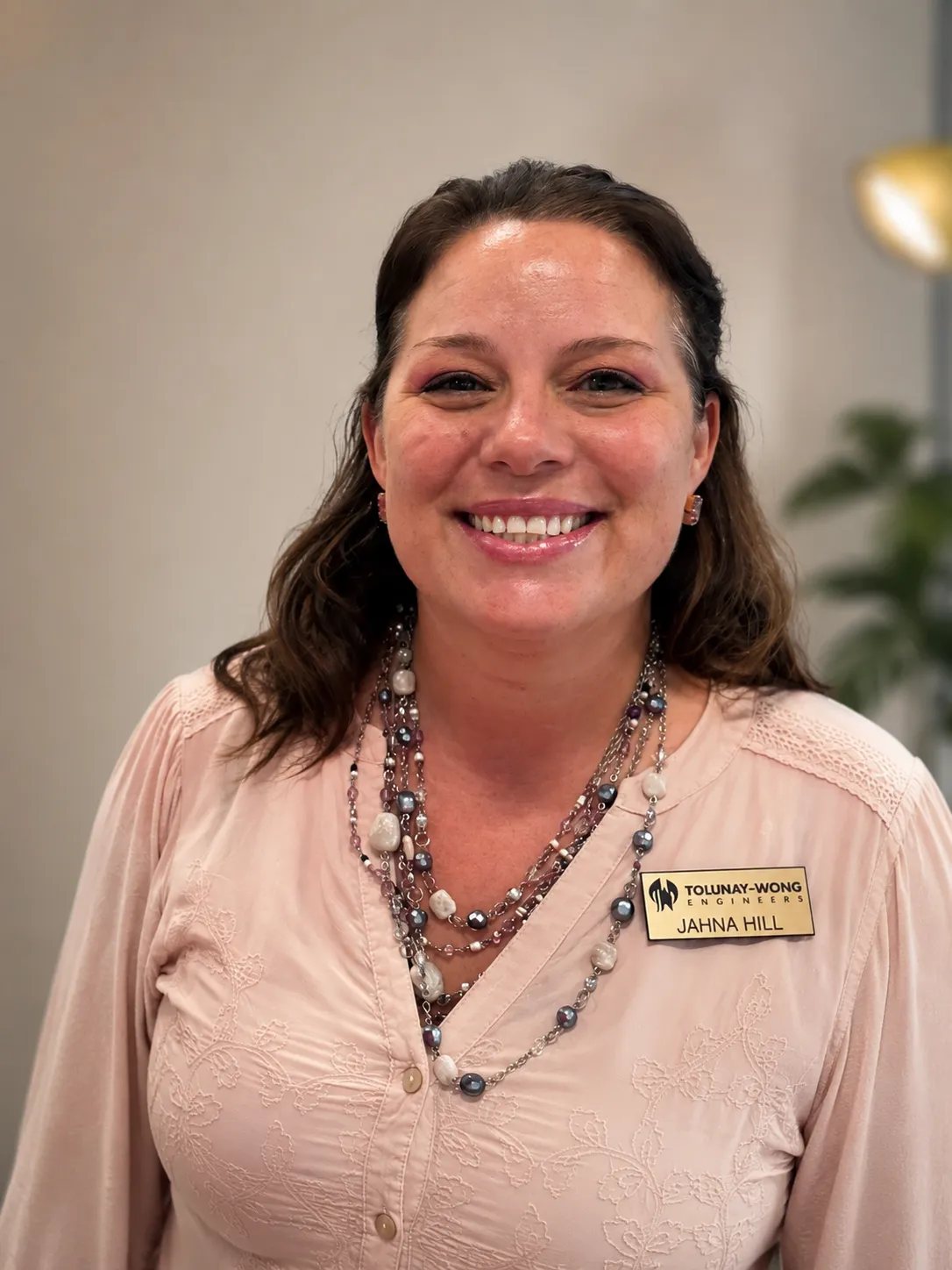
Her name is Jahna Hill. She's an environmental scientist with Tolunay-Wong Engineers, she's been living and working on the Texas Gulf Coast for about four years now, and what she does matters more to this community than most people realize. Let’s dig in.
From a Love of Fish to a Career Protecting Water
I asked Jahna how she ended up in environmental science, and she simply said, “Fish."
"I got started because of my love for fish, and my passion to protect them," she told me.
That passion led her to earn a degree in fisheries biology and wildlife management, then a master's degree in environmental science with an emphasis on watershed management. Her mentors pushed her toward that graduate degree, and she was glad they did.
Her master's project was extraordinary. Rather than writing a theoretical paper, Jahna created a guidebook on how to develop a watershed association, and then as her case study, she actually built one. She organized her community in Tahlequah, Oklahoma, the historic capital of the Cherokee Nation, to become citizen scientists. Residents went out to the local creek, collected water samples, let bacteria cultures grow in petri dishes at home, and counted E. coli colonies. Kids. Adults. Cherokee Nation. The United Keetoowah Band of Cherokee Indians. Everybody.
"I wanted the public to know if it's safe," she said.
The creek had a bad reputation. It ran through five city parks where people loved to swim and play. Jahna developed her own bacteria source tracking program, identified the major source of contamination, worked with the property owner to correct it, and watched the E. coli levels drop. She collected enough data to potentially remove the creek from the EPA's impaired waters list entirely.
Doing the Complicated, Unglamorous Work That Protects Our Coast
After her time as stormwater manager for the city of Tahlequah and environmental coordinator for Choctaw Nation, Jahna made her way to Texas. Today she works as an environmental consultant at Tolunay-Wong Engineers, a geotechnical firm that handles deep soil and foundation testing, construction material testing, and all manner of environmental compliance work.
Her day-to-day world is permits. Inspections. Regulatory compliance. And she's the first to tell you it's complicated.
"It's as complicated as the regulation involved with the specific permit," she told me.
Here's something I found fascinating: every environmental permit in the U.S. starts at the federal level with the EPA. The EPA issues the framework, states receive their own permits from there, and then states issue individual permits downward. States must meet the minimum federal standard, but they can require more, especially in environmentally sensitive areas. Like, say, the Rockport coastline.
Jahna keeps track of all of it: stormwater permits, wastewater permits, construction permits, air quality regulations, safe drinking water standards. She bridges the gap between complex regulatory language and what a project actually needs to do to stay in compliance and protect the environment.
I asked her about the Restore Little Bay Foundation, a local effort close to my heart, and she was quick to note that overlapping permits are one of the real challenges in coastal restoration work. There is a reason you need someone like Jahna in your corner.
"That's why it's important to have a scientist or a consultant who knows the regulations," she said, "and knows how to take this regulation and compare it to the other regulations."
A Scientist Who Shows Up for Kids
One of my favorite parts of our conversation was when Jahna lit up talking about Earth Day Bay Day.
She designed a hands-on construction corner exhibit for kids. Little ones put on hard hats and safety vests. They climbed into mini excavators. They dug soil from kiddie pools, loaded it into tiny lab vials, and ran pH tests right there at a little field laboratory she set up on the spot.
When kids finished, Jahna thanked each of them for being "a citizen scientist, a heavy equipment operator, and a very important part of a safety crew."
I absolutely loved that.
"That's what kids need," she said. "They need real life experiences to see that you could really do this, and it could really be fun, and you're learning too."
She is so right. And as a mom, I think about that constantly.
The Numbers: Women in Science
I want to share something with you, especially if you have daughters, granddaughters, nieces, or young girls in your life who love nature, animals, water, or the outdoors.
As of 2024, women make up 28.2% of the global STEM workforce, according to the World Economic Forum. Men make up the remaining 71.8%. In research positions specifically, women hold fewer than one-third of roles worldwide, according to UNESCO.
Here in the United States, women represent about 27% of STEM workers, compared to 73% who are men. In engineering fields, the gap is even wider: women hold just 15% of those jobs. Even in environmental and geosciences fields, men still outnumber women significantly.
Those numbers aren't meant to discourage anyone. They're meant to show exactly the opposite. The field is wide open. The doors are there. And women like Jahna Hill are already walking through them, doing incredible work, and proving every single day that this is absolutely a path for girls who love science and the natural world.
There is room. There is a need. And the coast we love is counting on the next generation to step up and protect it.
To Every Little Girl Who Loves the Outdoors
This section is for them.
Tell your daughters, granddaughters, nieces, and young friends about Jahna Hill. Tell them she started with a love of fish. Tell them she organized an entire community to test a creek. Tell them she puts hard hats on little kids and calls them citizen scientists.
Tell them this is a real career. That it matters deeply. That it pays well. And that the bay, the birds, the wetlands, and the coastline they love need more people like them to show up and fight for it.
I am so proud to know Jahna, and I am proud to have her doing this work right here in our backyard. She is exactly the kind of woman I want my daughters to see.
I will be cheering her on.
Jahna Hill is an environmental scientist with Tolunay-Wong Engineers. Learn more about environmental compliance and coastal restoration efforts in Aransas County by following The Rockport Pirate.